
Gloucester Cathedral: a stunning building with a rich history
Gloucester Cathedral is a stunning building and the city’s top tourist attraction. It is the city’s centrepiece and has a fascinating history. The cathedral is one of the top tourist attractions in the city and the county for excellent reasons. The site has had many visitors throughout history, including Henry VIII and Anne Boleyn in 1535.
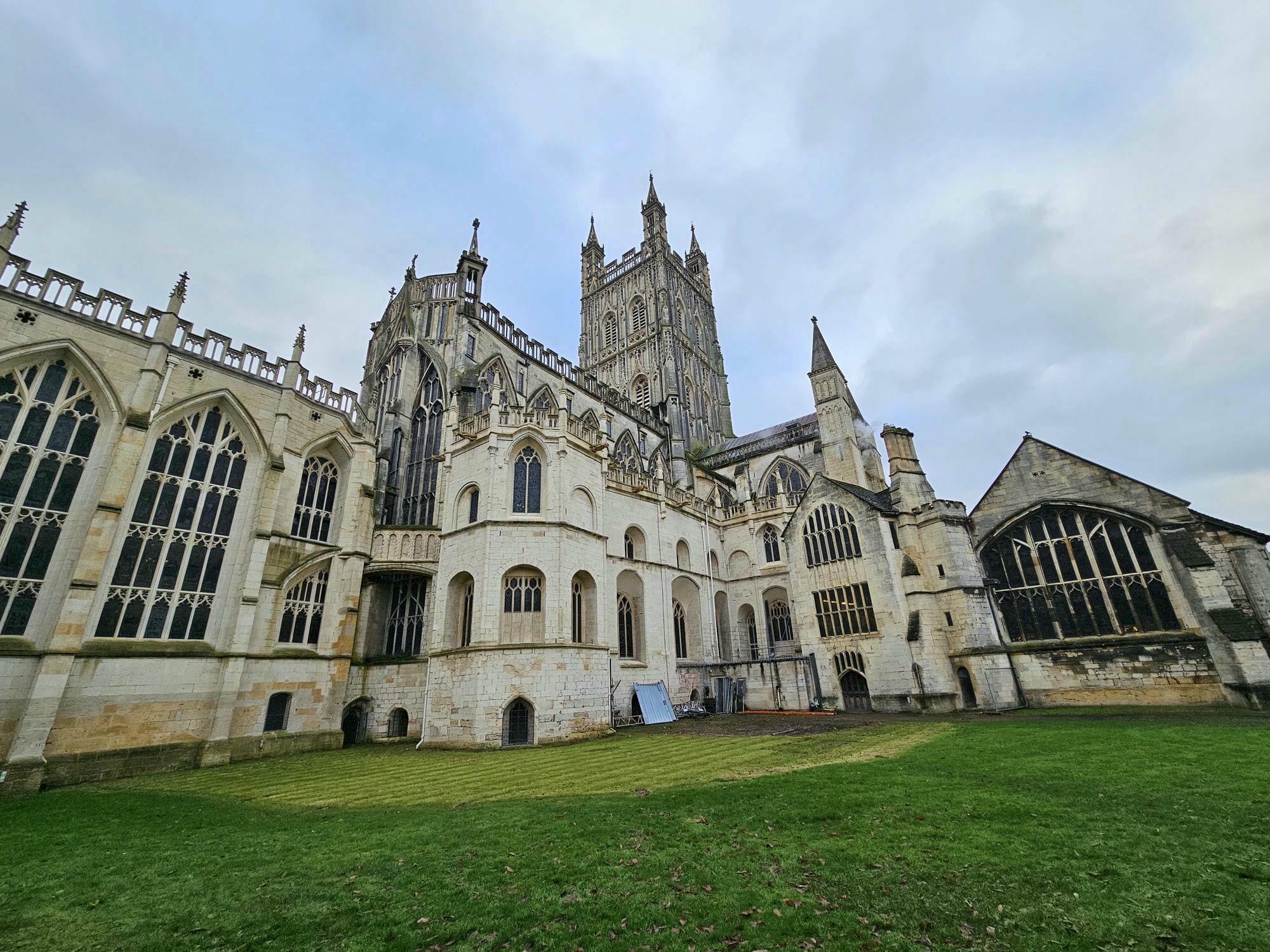
The building’s architecture is grand, and its size is imposing. Inside, the building is stunning and has loads to see. You can also learn about the rich history of the building – nearly 1000 years of history, in fact.
Visiting The Cathedral
Gloucester Cathedral is one of the city’s top attractions and well worth a visit to see the exterior and explore the interior. Typically, the cathedral is free to enter unless an event is on; however, they do ask for a small donation on entry. You can also book a guided tour to see all areas of the site. You can find opening times, learn some history, and arrange a tour on the cathedral’s website.
Gloucester Cathedral in England
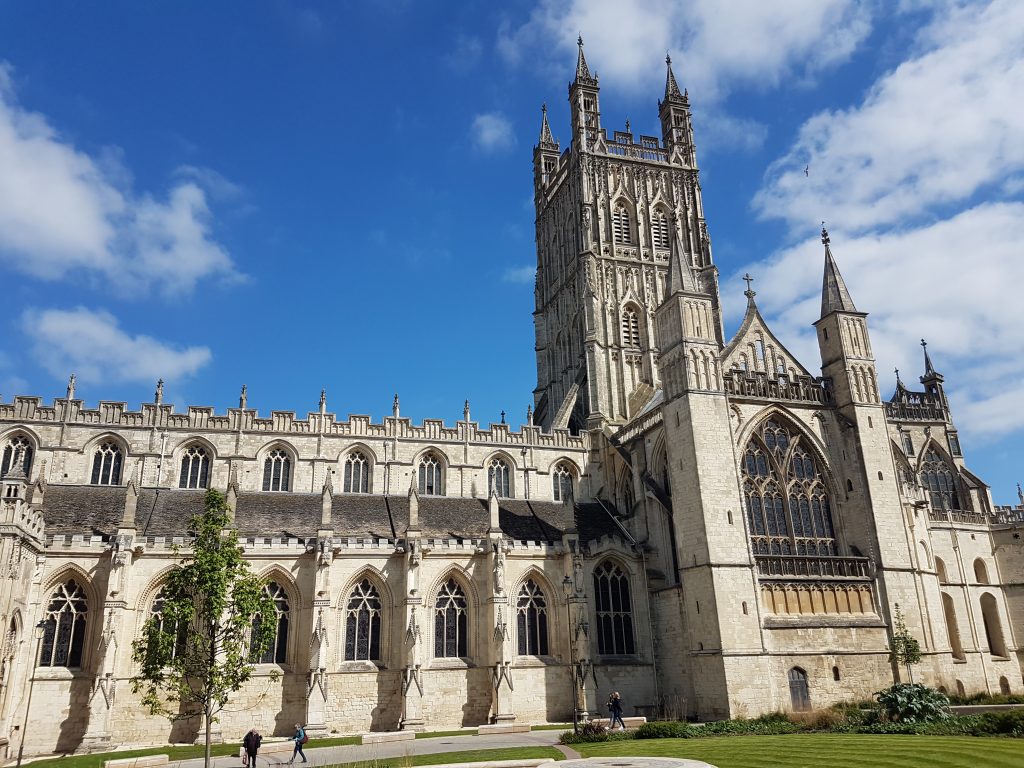
Gloucester Cathedral was the Cathedral Church of St Peter and the Holy and Indivisible Trinity. The magnificent structure sits in the city’s north, near the River Severn. Parts of the cathedral date back to 678 or 679, in particular the foundation of an abbey dedicated to Saint Peter.
The Cloisters
The cathedral’s cloisters, made famous by the Harry Potter movies, are stunning. These are corridors that surround the cloister garden and are absolutely stunning. The magnificent fan vaulting of Gloucester’s great cloister, believed to be the earliest example in England, is well-known.

Originally, the cloisters were meant to house the area’s monks. These provided all the space a monk needed to live, sleep, work, and meditate. Traditionally, cloisters are on the south side of religious buildings; however, this is unique, as they face north. They are fantastic to visit and a treat for photographers because of the light coming through the cloister’s windows. All three are very ornate and fascinating to study if you have the time and it’s quiet. The cloisters have also been in a variety of movies, including Harry Potter.
The Secret Garden
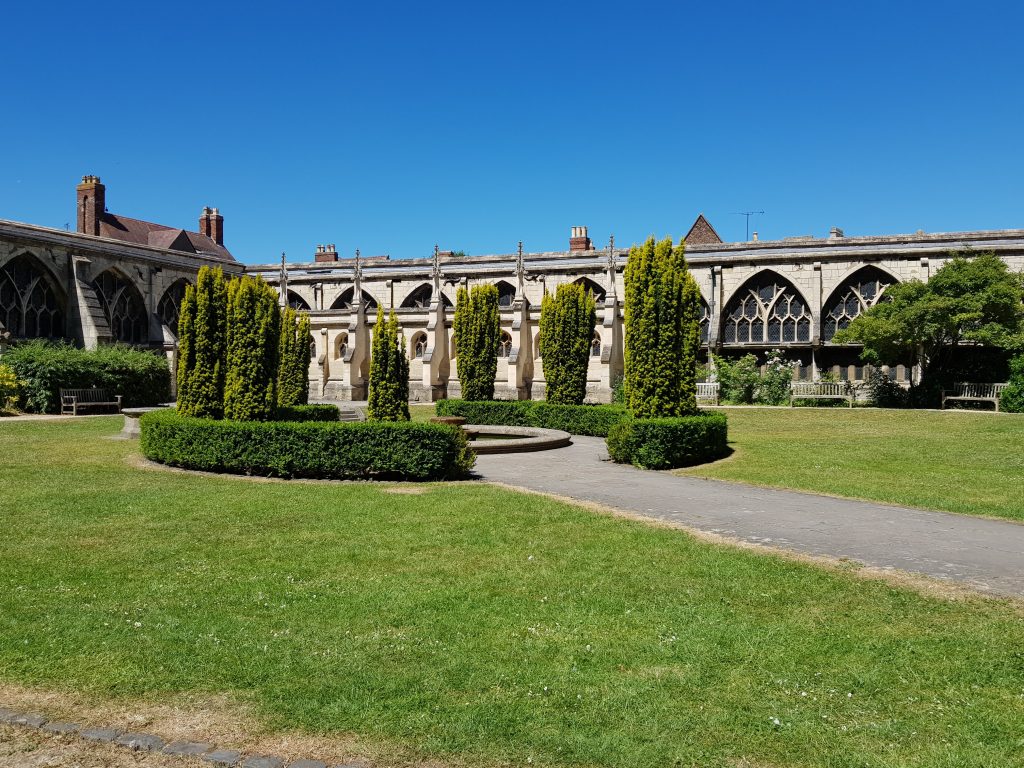
The three cloisters box in the principal building, the Secret Garden. This is a very relaxing place to sit and admire the buildings. It is also one of the best places to photograph the main tower.
If you are lucky, you may see peregrine falcons flying near the tower. The Tower was built in the 1450s and is home to a medieval bell called “Great Peter”. The bell announces the time in the city and summons residents to worship. This garden features in the movie Harry Potter and the Philosopher’s Stone.
Grounds

The cathedral is a magnificent building to admire from the outside; the grounds are also a nice place to sit and take in the view. There is plenty of seating and a nicely maintained garden. The grounds are a great place to sit and have an alfresco lunch in the city centre. It is not uncommon for people to grab lunch from a nearby sandwich shop or chippy and enjoy an alfresco lunch here.
Freemasons’ Memorial

Inside on the wall is a memorial for the Freemasons of Gloucestershire who fell in the “Great War”. The plaque is instantly recognisable by the square-and-compasses symbol at the top. People often think of Freemasons as a secret, men-only society with unique rituals. Masonry consists of fraternal organisations that trace their origins to local stonemason fraternities. By the end of the 14th century, these regulated stonemasons’ qualifications and their business.
What’s near to Gloucester Cathedral?
Other interesting sites of historical interest are located very near to the cathedral.
St Michael’s Gate & College Court

Between Westgate Street and the cathedral is College Court, possibly Gloucester’s most attractive shopping street. At the cathedral end of College Court is St Michael’s Gate. St Michael’s Gate is a 14th-century pedestrian gateway in the former precinct wall of the Benedictine Abbey of St Peter, which is now the Cathedral. Throughout history, it has had many names, such as the Gate to College Court, Upper College Gate, and Cemetery Gate.
Bishop Hooper Memorial
Located a short walk from Gloucester Cathedral is the Bishop Hooper Memorial, a pretty monument in St Mary’s Square. The best way to find it is to pass through Saint Mary’s Gate to the west of the cathedral. You can find this in the gardens of St Mary de Lode Church, and it is quite impressive.

The monument commemorates Bishop Hooper, who was burnt at the stake in 1555. They killed him because of his protestant religious beliefs. This memorial was built between 1861 and 1863. The monument includes a statue of the bishop facing east and has many decorative features.
St Nicholas Church, Gloucester
On Lower Westgate Street is the historic St Nicholas Church. However, visitors often overlook it because of the cathedral. This church has a fascinating history; the tour guides here are top-notch and very knowledgeable. The church’s history dates back to the 12th century.

The church has many great artefacts, including a replica 14th-century sanctuary knocker (the original is in the museum). People who used to knock to claim sanctuary in the church, a medieval safe space, used this knocker.
St Oswald’s Priory
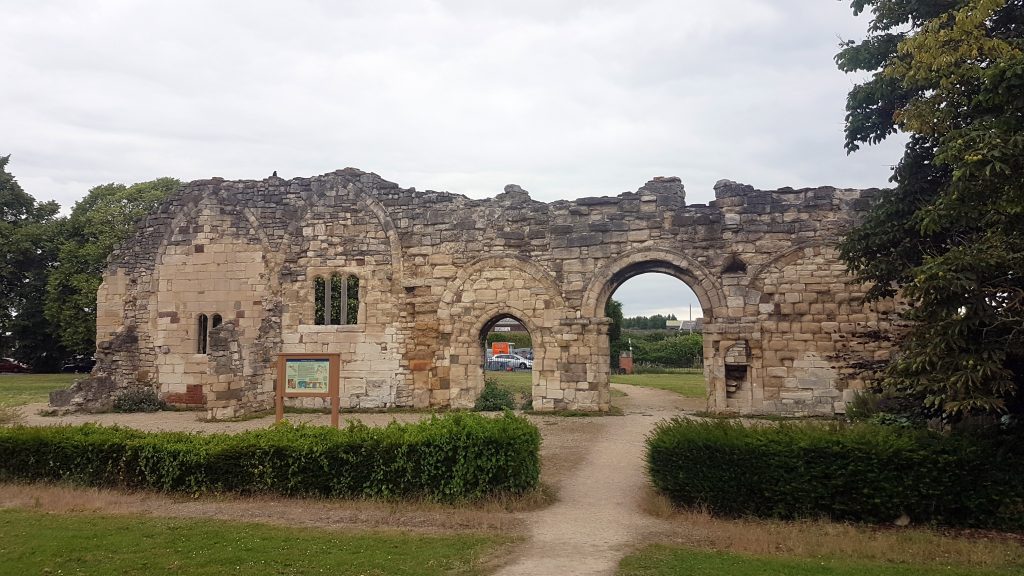
St Oswald’s Priory is located a short walk away and is an interesting set of ruins to visit. Lady Aethelflaed of Mercia, daughter of Alfred the Great, founded it around 900 AD. The priory was constructed using recycled Roman stones. Originally, the site was a Christian burial site, but in 909 AD they brought the relics of St Oswald here. The building was later dedicated to St Oswald.