
Priories of Gloucester
There are a few priories in Gloucestershire, most of which are in Gloucester. The Priories of Gloucester are all within walking distance of each other, making for a great walk through history. The city has many churches and the cathedral to see. This lets you experience the city’s religious history.
Priories of Gloucester
St Oswald’s Priory Ruins

The Anglo-Saxon St Oswald’s Priory is near Gloucester Cathedral. It is a historically significant religious site in the city and has an intriguing backstory. The current site is a preserved ruin in a park. Many posters detail the artefact’s history.
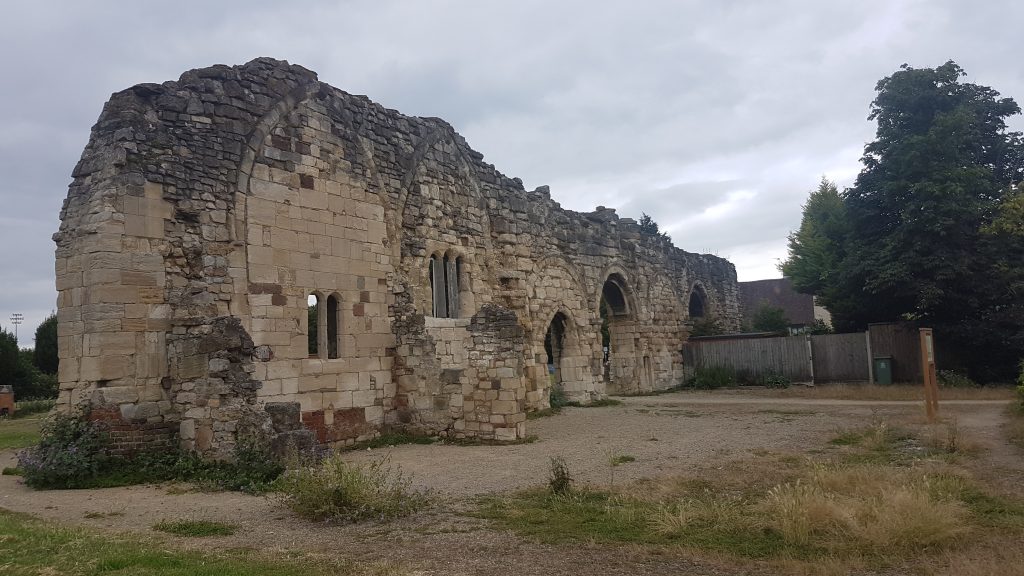
Lady Aethelflaed of Mercia founded St Oswald’s Priory. She was the daughter of Alfred the Great, and she founded the priory around 900 AD. They constructed the original building using recycled Roman stones. Originally, this site was a Christian burial site, but it was repurposed in 909 AD. They brought St Oswald’s relics to the priory. Then they dedicated it to St Oswald.
Llanthony Secunda Priory
Located to the south of Gloucester, just off the canal towpath and a short walk from the historic docks. You can explore the grounds of Llanthony Secunda Priory year-round. The grounds are home to many wildflowers, and the pond has reeds.

Only a small part of the medieval priory has survived. The site includes the great barn. What remains of this well shows the size and quality of the original building. The ruins of the original barn are accessible year-round while walking the grounds.

The canons of Llanthony Priory established Llanthony Secunda Priory in Gloucester. Driven out of their priory in Wales by constant Welsh raids, the canons founded the monastery.
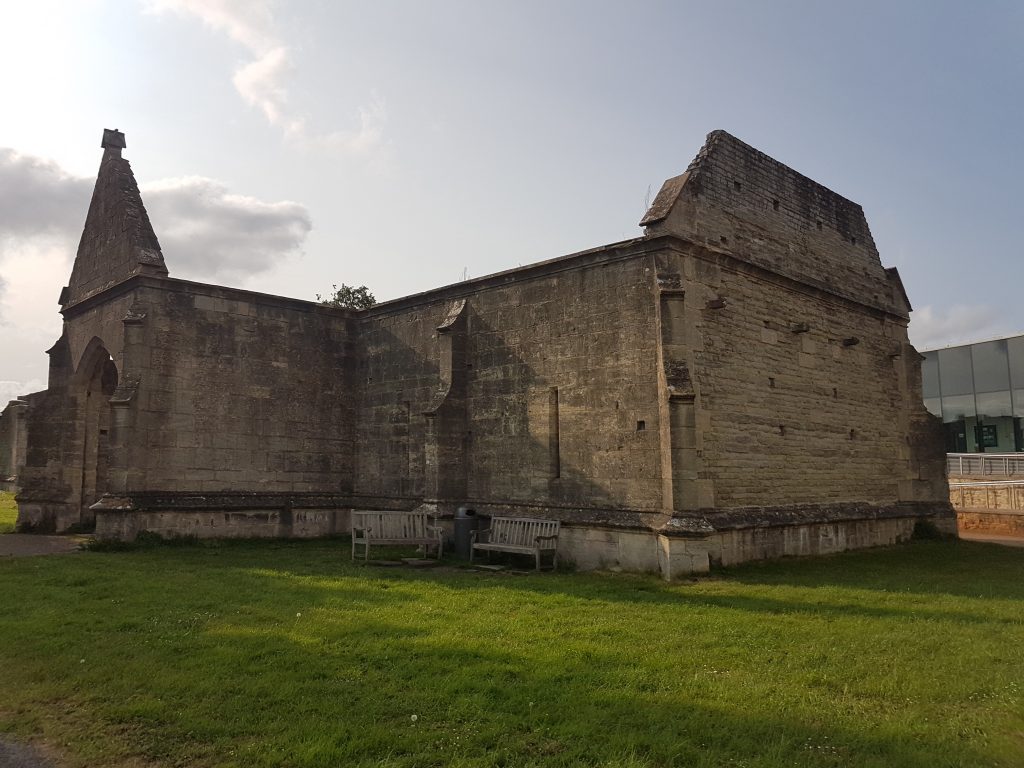
In 1136, after frequent attacks from the local Welsh population, the monks of the original Llanthony Priory retreated and then moved to Gloucester. This was the birth of Llanthony Secunda Priory. The site has various open days where you can explore inside with a guide.
Greyfriars Priory Ruins

Greyfriars was a medieval monastic house founded about 1231. The current Greyfriars site is the remains of the 16th-century friary church.
Blackfriars

They founded Gloucester Blackfriars in 1239 for a community of Dominican friars. They called them Blackfriars because of the colour of their habits. Significant fragments of the church still survive, including 13th-century roof timbers. At its busiest, the monastery housed 40 friars. Henry VIII’s dissolution of the monasteries closed Blackfriars in 1539. They sold the buildings to a local clothier, Alderman Thomas Bell; he converted the church into a mansion. He used the buildings around the cloister as a workshop.
Guided tours are available on request. You can arrange tours via the local Civic Trust. The venue is also now available for weddings, corporate hires, and other private events.