
Cirencester, Gloucestershire Visitor Guide – Things to Do
Cirencester in Gloucestershire is a historic market town in the Cotswolds, best known for its Roman past, attractive town centre, parks, markets and Cotswold stone buildings. Often called the “Capital of the Cotswolds”, it is also the largest town in the Cotswold District.

I’ve spent quite a bit of time exploring Cirencester on foot and it is one of those towns where there is always something else tucked away down a side street. The centre is compact enough to explore without a car, with most of the main sights within walking distance of the Market Place.


The River Churn runs through Cirencester and through the Abbey Grounds. Beyond the town centre are larger green spaces including Cirencester Park, while the surrounding countryside makes the town a useful base for exploring more of the Cotswolds.
Things To Do In Cirencester
Cirencester offers a good mix of history, green spaces, shopping, and places to eat. Roman history is the obvious starting point, but I also enjoy simply walking around the older streets, Abbey Grounds and Cirencester Park.
Corinium Museum & Roman Cirencester
Cirencester was known as Corinium during the Roman period. It developed from an early military site into one of the largest settlements in Roman Britain and eventually became the capital of the Roman province of Britannia Prima.
Corinium Museum is the best place to learn more about this part of the town’s history. Its collections include Roman mosaics, sculpture, jewellery, tombstones and objects discovered during excavations in and around Cirencester. It also has considerably more than Roman history, with displays covering prehistoric, Anglo-Saxon and medieval life in the Cotswolds.
I think the museum makes much more sense if you combine it with a walk around the town afterwards. Once you know what Corinium looked like, features such as the surviving Roman wall in Abbey Grounds and the amphitheatre are much easier to put into context.
Cirencester Roman Amphitheatre
The remains of Cirencester Roman Amphitheatre are a short walk from the centre on Cotswold Avenue. Built in the early 2nd century, it could accommodate around 8,000 spectators.

You won’t find standing stone walls like you might expect at some Roman sites. What survives is the large oval earthwork, but its shape and entrances are still easy to make out. Entry is free, and the site is generally accessible during daylight hours.
Church of St John the Baptist


The Parish Church of St John the Baptist dominates the Market Place and is Gloucestershire’s largest parish church. Parts of the building date back to the 12th century, although it developed considerably over the centuries that followed.


It is worth going inside rather than only photographing the exterior. I particularly like the scale of the nave, the stained glass and the smaller architectural details around the chapels, monuments and pulpit. The huge south porch facing the Market Place is one of the church’s most recognisable features.
Abbey Grounds

Immediately behind the church are the Abbey Grounds, one of my favourite places in central Cirencester for a walk or a quiet break away from the shops. The grounds include open lawns, mature trees, the River Churn, a lake and the remains of several important parts of Cirencester’s history.

St Mary’s Abbey once stood here and was consecrated in 1176. The abbey was dissolved in 1539 and subsequently demolished, with the Norman Arch now the only surviving abbey structure. The lake was once used as the abbey fishpond.

A surviving section of Cirencester’s Roman town wall also lies in the grounds. I like this part of the town because the Roman, medieval and modern history all sit within a relatively small area.

The Abbot’s Garden is a quieter part of Abbey Grounds, while the larger lawns and lake are popular for walks and picnics. I’ve visited in autumn when the trees around the grounds and lake make this one of the most colourful parts of Cirencester.
Cirencester Park

At the top of Cecily Hill is Cirencester Park, part of the Bathurst Estate. The Grade I listed parkland was landscaped during the 18th century and has long avenues, woodland and extensive walking routes leading away from the town.


I particularly enjoy walking here in autumn when the main avenues and wooded sections change colour. You also get excellent views back towards Cirencester and the tower of St John Baptist Church. Cirencester Park now has an admission charge, so check the official website for current opening times, ticket prices, and passes before visiting.
Shopping & Markets In Cirencester
Cirencester is still very much a working market town rather than somewhere that exists purely for tourism. The town centre has national retailers, but there are also lots of independent shops, cafés and smaller businesses spread around Market Place, Castle Street, Cricklade Street, Black Jack Street and the surrounding lanes.
Cirencester Markets

The Market Place hosts the regular Cirencester Charter Market on Mondays and Fridays. Farmers’ Markets are normally held on the second and fourth Saturdays of the month, with arts and crafts, seasonal and speciality markets taking place at other times.


I enjoy the markets most when they offer a mix of local food, fresh produce, and independent traders. Cirencester also has some larger seasonal markets, particularly in the run-up to Christmas. I have more information about markets elsewhere in the county in my Gloucestershire markets guide.
The Corn Hall


The Corn Hall is on the Market Place and continues to host indoor markets, craft events, antiques, and other events. The building dates from the 19th century and also contains shops and food businesses, so it is worth walking through rather than passing it on the way around town.
Independent Shops
Some of the more interesting shopping is away from the main retail chains. Black Jack Street in particular has a good concentration of independent businesses and is also home to Octavia’s Bookshop and the entrance to the Corinium Museum.
Cirencester Antiques Centre is another interesting place to browse. It occupies a historic timber-framed building and has multiple dealers selling antiques and collectables including jewellery, ceramics, art, watches and vintage items.
Pubs, Cafes & Restaurants In Cirencester
There is no shortage of places to eat in Cirencester, ranging from cafés and pubs to restaurants and delis. Most are concentrated around the town centre, so it is easy to stop somewhere while exploring rather than having to travel elsewhere.
The Crown in Cirencester
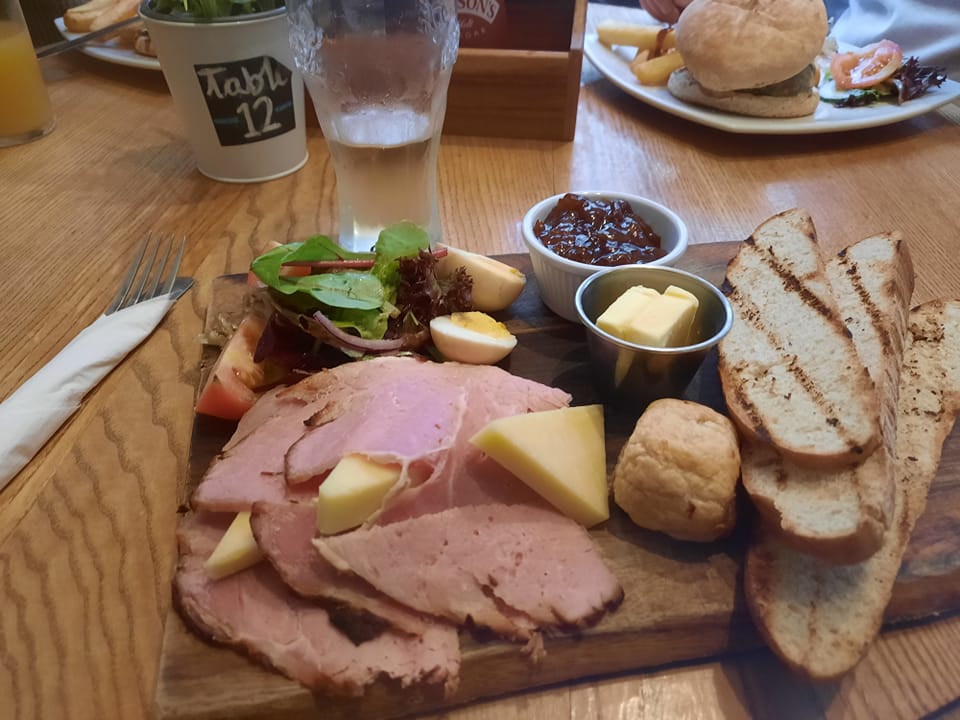
The Crown is in West Market Place and is somewhere I’ve enjoyed visiting for lunch. It has seating inside as well as an outside area and serves pub food, lighter meals and drinks.
One of my favourite lunches here has been the ploughman’s, with cheese, ham, pickles and bread. Its central location also makes The Crown convenient if you’re visiting the church, Market Place or Abbey Grounds.
The Fleece


The Fleece occupies a prominent position on the Market Place opposite the church. It is an historic inn made up of Grade II listed buildings and operates as a pub, restaurant and place to stay. It is a useful option if you want food or a drink right in the centre of Cirencester.
Walking Around Cirencester
Cirencester is a good town to explore on foot. Away from the main roads, plenty of quieter lanes, historic buildings, and small details are easy to miss if you are driving through.
The Abbey Grounds, River Churn and Cirencester Park provide greener walks close to the centre. For longer countryside routes, there are many more options throughout the surrounding Cotswolds, which I cover in my guide to countryside walks in the Cotswolds.
Visiting Cirencester, Gloucestershire
Cirencester is in eastern Gloucestershire, with the A417 and A419 providing the main road links towards Gloucester, Cheltenham, Swindon and the M4 and M5. The nearest railway station is at Kemble, a few miles outside the town, with onward connections available by road and bus.
If you’re visiting for the first time, I would allow at least half a day for the centre alone and longer if you want to visit the Corinium Museum and spend time walking in Cirencester Park. The museum, Market Place, church, Abbey Grounds and main shopping streets are all relatively close together.
What Is Cirencester Known For?
Cirencester is particularly known for its Roman history. Roman Corinium was one of the most important towns in Roman Britain, and many finds from the settlement are now displayed at the Corinium Museum. The town is also known for St John Baptist Church, Cirencester Park, its markets and its position at the heart of the Cotswolds.
Is Cirencester Worth Visiting?
For me, yes. It has enough history and attractions to justify a dedicated visit but still feels like a proper Gloucestershire market town. Roman sites, parks, independent shops, pubs and cafés are all close together, and it is also a practical starting point for exploring the surrounding Cotswolds.